The Autonomic Nervous System & ADHD: Understanding the Connection
ADHD affects more than focus - it impacts your entire nervous system. Research on sympathetic/parasympathetic balance and what it means for treatment.
Beyond Focus: ADHD as Autonomic Dysregulation
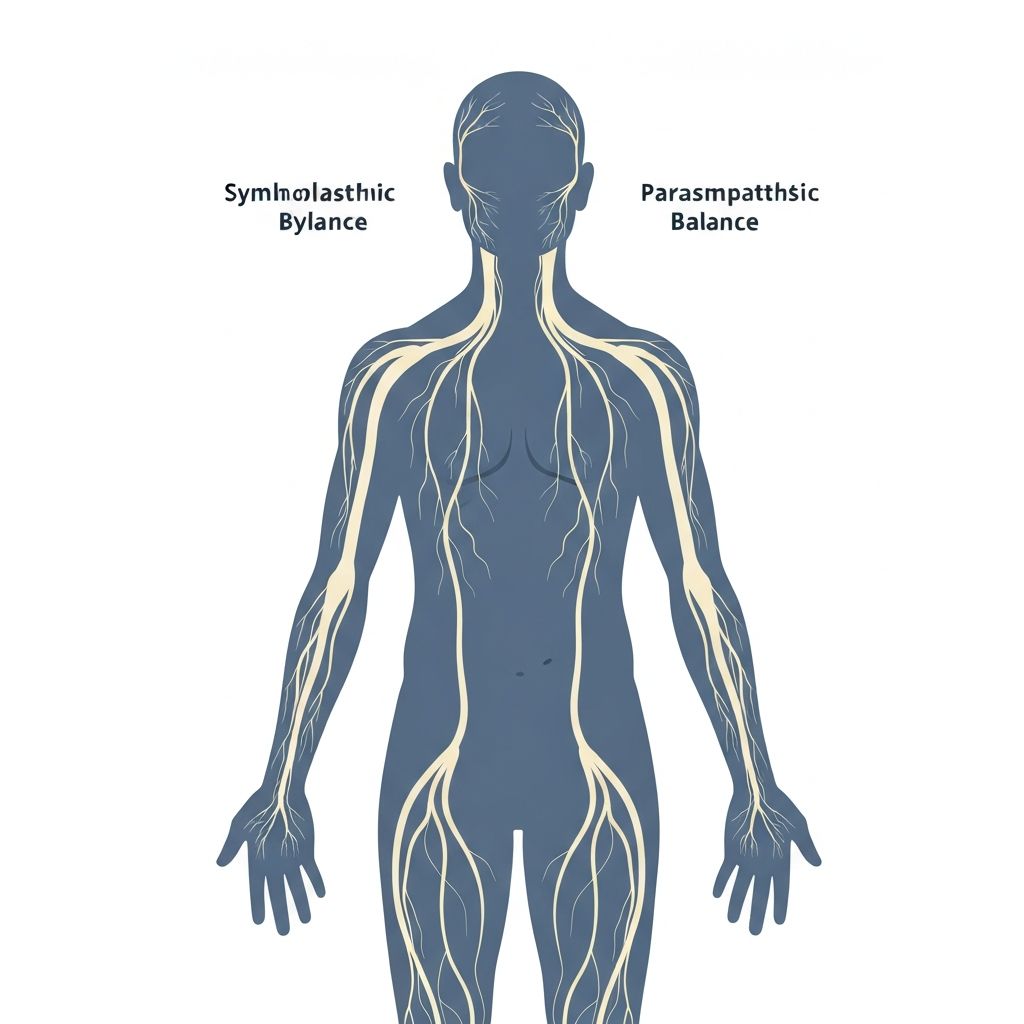
ADHD is often reduced to 'trouble focusing,' but this misses a fundamental aspect of the condition: autonomic nervous system dysfunction. The autonomic nervous system (ANS) controls involuntary functions like heart rate, digestion, and stress response - and it operates differently in ADHD.
Understanding ADHD as an ANS disorder explains symptoms that seem unrelated to attention: emotional reactivity, sleep problems, temperature regulation issues, digestive problems, and the feeling of being 'always on alert.'
Sympathetic vs. Parasympathetic Balance
The ANS has two branches: the sympathetic (activating, fight-or-flight) and parasympathetic (calming, rest-and-digest). Healthy function requires flexible shifting between these states depending on context.
Research consistently shows ADHD involves sympathetic dominance - an overactive fight-or-flight response - combined with reduced parasympathetic activity. This creates a state of chronic low-level stress even in safe environments.
This imbalance explains why people with ADHD often feel 'wired but tired,' have difficulty relaxing, and may experience anxiety symptoms even without an anxiety disorder.
The Vagus Nerve Connection
The vagus nerve is the primary parasympathetic pathway, running from the brainstem to organs throughout the body. 'Vagal tone' - the activity level of this nerve - is measured indirectly through HRV.
Studies show reduced vagal tone in ADHD, which correlates with emotional dysregulation, reduced stress resilience, and impaired social engagement (the vagus nerve influences facial expression and voice modulation).
Interventions that increase vagal tone - cold exposure, deep breathing, meditation, and exercise - may complement ADHD treatment by addressing this underlying autonomic dysfunction.
Implications for Treatment
Stimulant medications primarily target dopamine and norepinephrine, but they also affect autonomic function. The ideal medication response includes improved autonomic regulation, not just better focus.
Non-medication interventions targeting the ANS deserve more attention: HRV biofeedback training has shown promise in ADHD studies, as have mindfulness practices that activate the parasympathetic system.
Sleep hygiene is crucial because sleep is when parasympathetic activity dominates and restoration occurs. Poor sleep perpetuates autonomic imbalance.
Exercise, particularly aerobic exercise, improves autonomic regulation and has proven ADHD symptom benefits - possibly through this mechanism.
Research Foundation
Beauchaine & Thayer (2015) - Comprehensive review of autonomic nervous system dysfunction in ADHD (Psychological Bulletin)
Robe et al. (2019) - Meta-analysis confirming reduced HRV across ADHD age groups (Clinical Psychology Review)
Rukmani et al. (2016) - Heart rate variability in children with ADHD (Annals of Neurosciences)
Musser & Nigg (2019) - Emotion dysregulation across ADHD dimensions linked to ANS function (Journal of Clinical Child Psychology)
Understand your ADHD better
Our comprehensive assessment evaluates multiple dimensions of ADHD to provide personalized insights.
Take Full Assessment